What you can see
The tracker reads the same data your vehicle uses for its own diagnostics and sends it to Azuga in real time. In Azuga’s web and mobile apps, you can see:
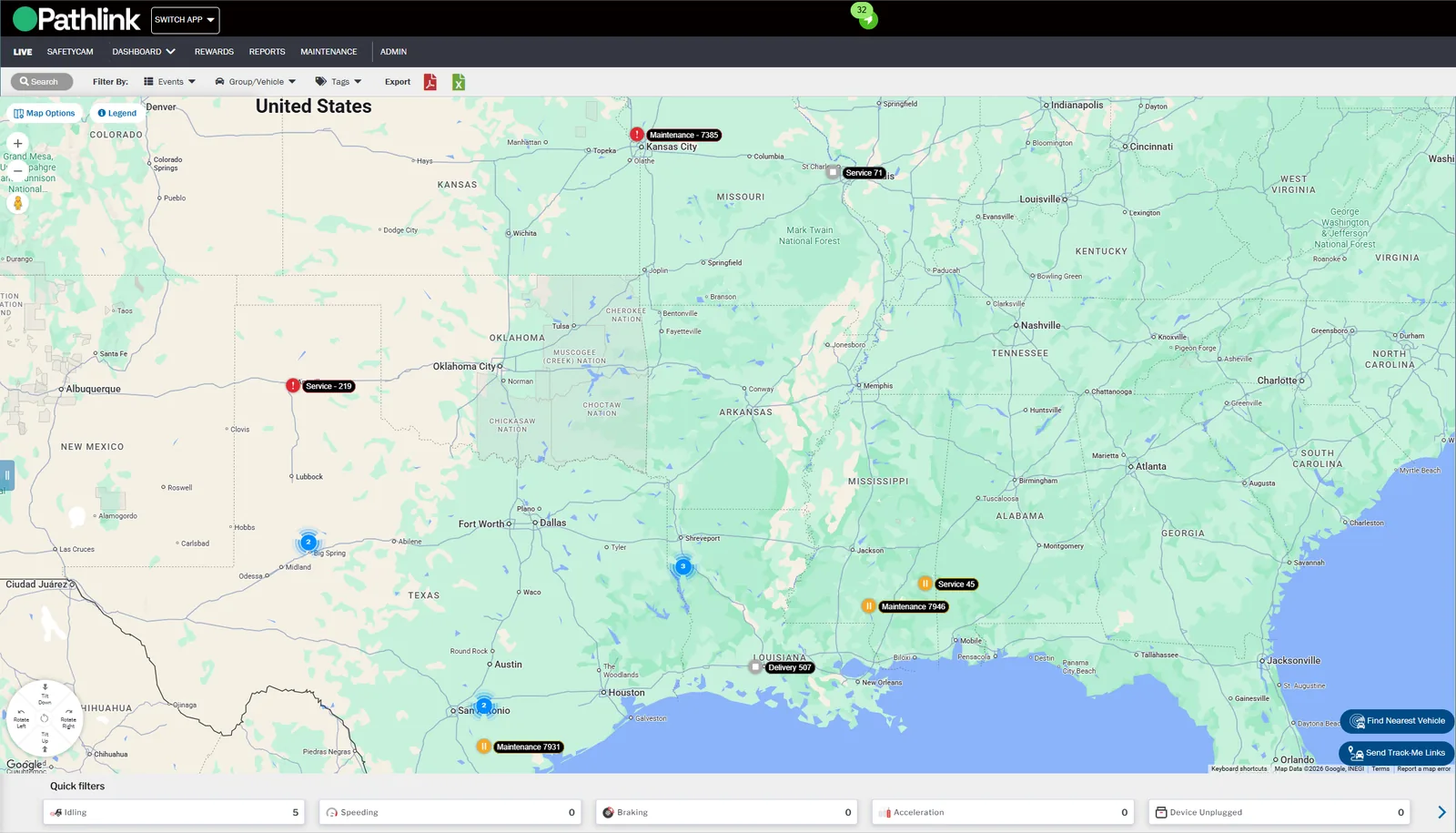
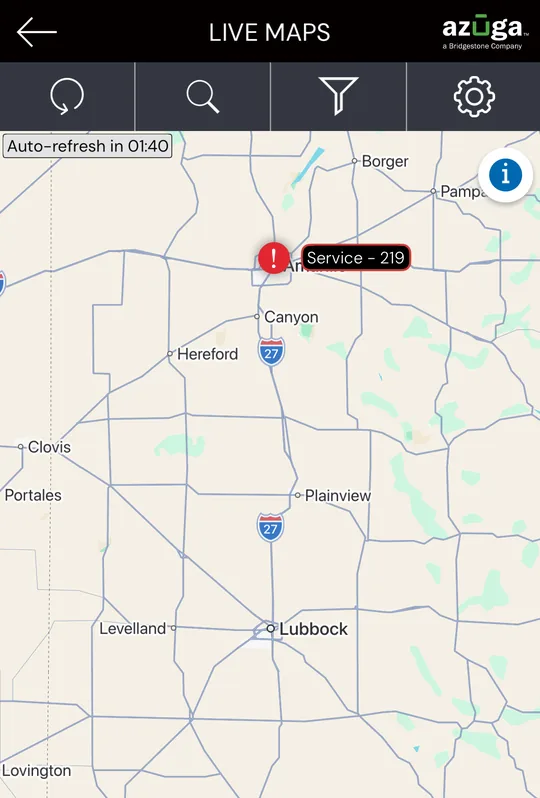
- Where every vehicle is right now, on a live map
- When vehicles arrive at and leave job sites, customers and your yard, with geofences
- Speed, and who’s speeding
- Hard braking, harsh cornering and other risky driving
- Seat belt use
- Odometer readings, for mileage and maintenance planning
- Fuel use
- Engine health and dashboard warning lights
- Tire pressure
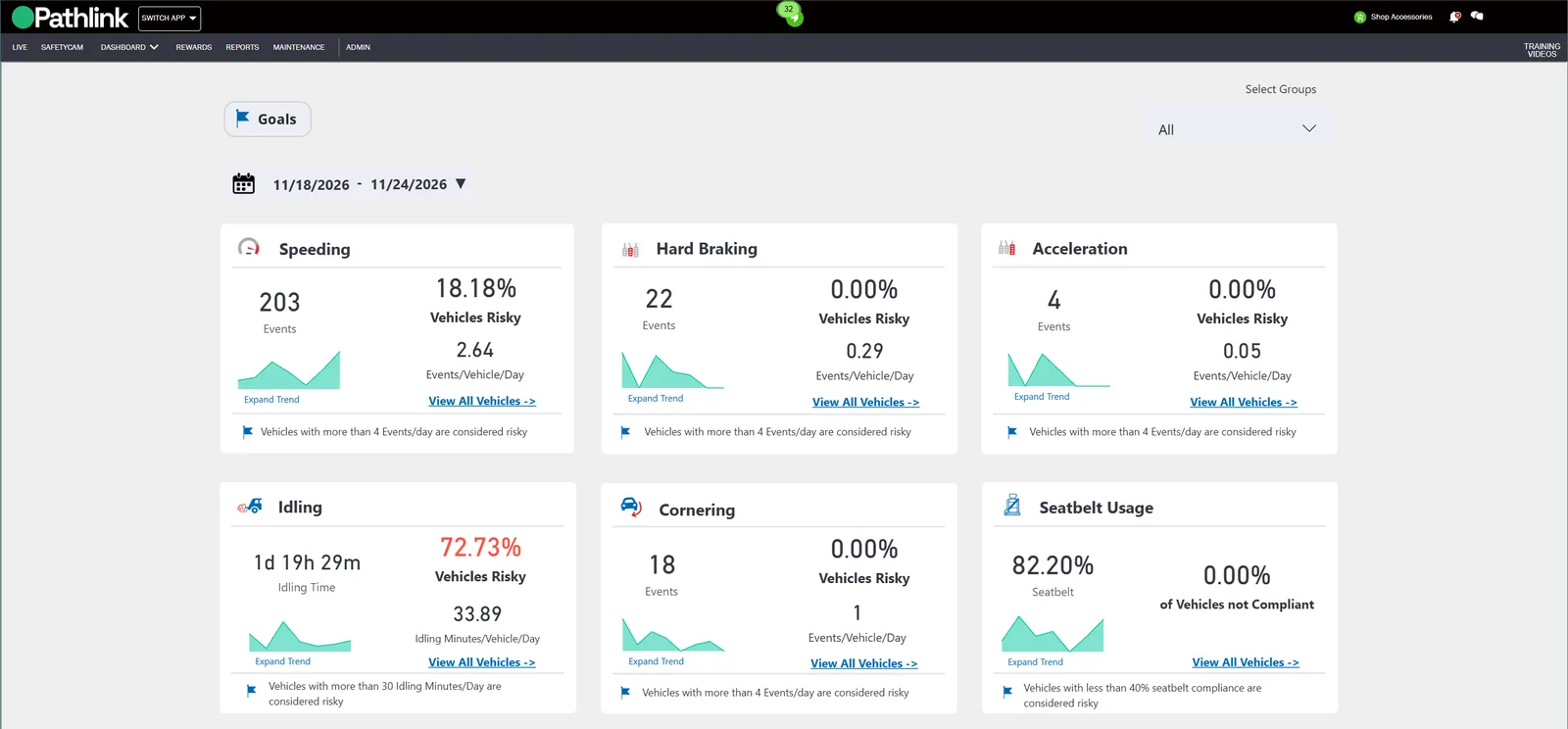
What the tracker can read depends on the vehicle. Seat belt and tire pressure data, for example, aren’t available on every make and model. Tell us what you drive and we’ll tell you what to expect.
Three ways to connect
Plug-in (OBD-II)
Most cars, vans and light trucks built since 1996 have an OBD-II diagnostic port, usually under the dashboard. The tracker plugs straight in, with no wiring. An optional Y-splitter cable lets us tuck the tracker out of sight and keeps the port free for your mechanic.
Heavy-duty trucks (JBUS)
Medium and heavy-duty trucks use a different diagnostic port. With the right adapter cable, the same tracker connects to 6-pin, 9-pin and 9-pin Type II ports, or to an RP1226 connector.
Hardwired
For a permanent install, our technician wires the tracker into the vehicle’s power, ignition and ground. A hardwired tracker is harder to tamper with, stays powered at all times, and can alert you if someone tries to disconnect it.
An optional PTO input wire can also show when equipment like a pump, lift or plow is switched on.
One system for a mixed fleet
Pickups, box trucks and tractor-trailers may need different connections, but they don’t need different systems. Every vehicle shows up in the same place, however its tracker is connected.
Trips and mileage
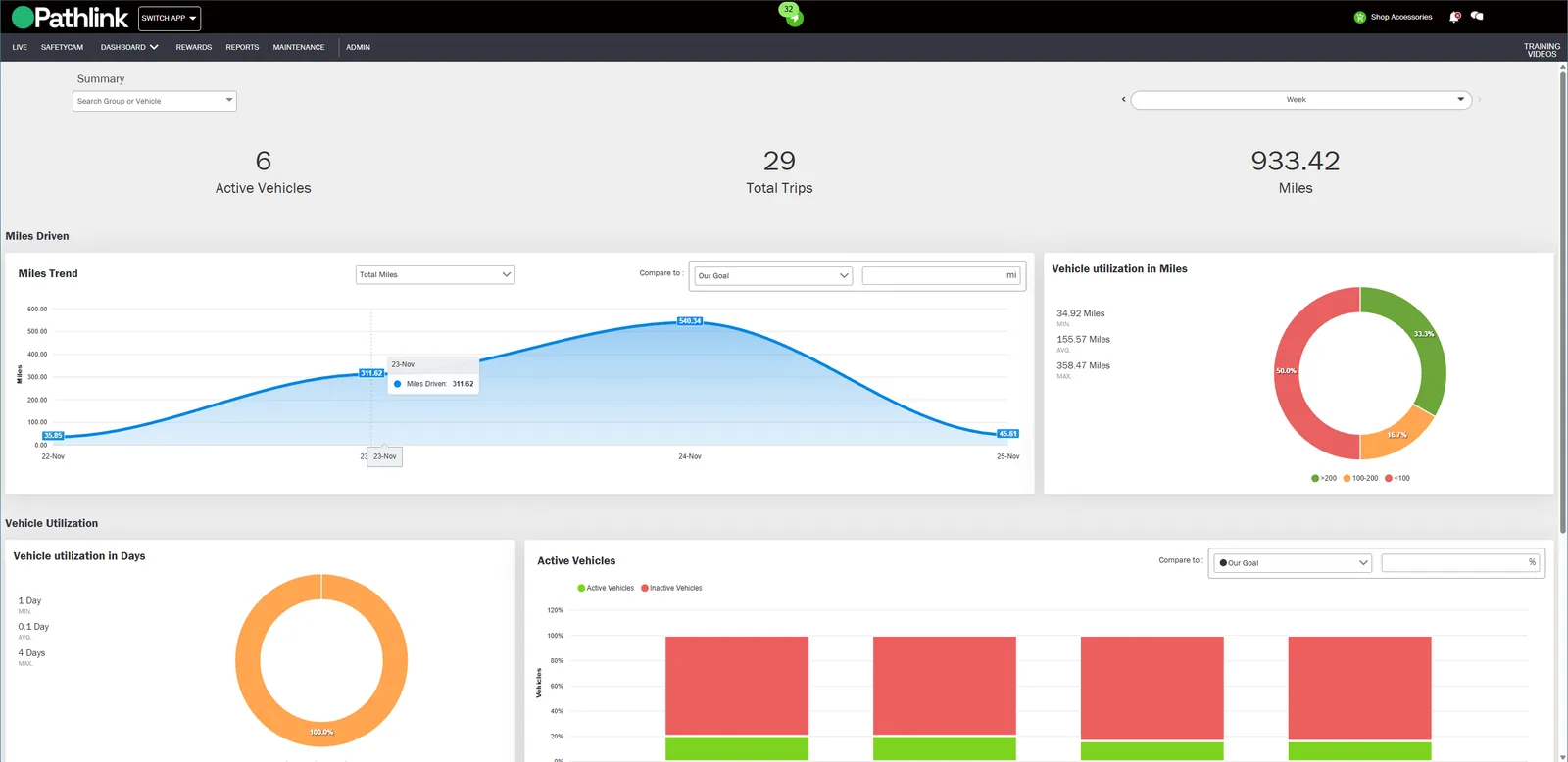
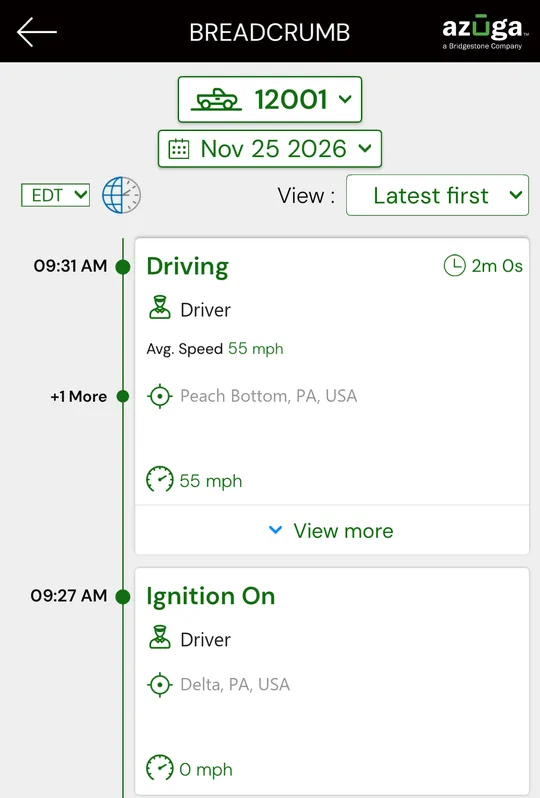
Look back at any vehicle’s day stop by stop, with when it started, where it went and how fast it was going. Or step back and see total trips, miles driven and how much each vehicle is really used.
Installed for you
Every Pathlink install is done by a local technician, at a fixed price based on your vehicles and the devices you choose, so you know the cost up front.
New to fleet tracking? Read What is GPS fleet tracking? for how it works, what it costs and what to look for.